Translation in the key of /ɔː/ as in the key of /uː/. The allness of flaw. And la tous-talité du tort. Je me suis loupée avec une Française comme je me suis loupée avec moi-même. Bredouilleuse. Officially, formally, syllabically. This is the state of the déformaduction, mes déformaductions. The failed and failing state, the ruined tongue and the ruined body of the woman writer. Who is ready to off it all because much has been offed for her. The seduction of leaning into that, the bitter pleasure. Like going to bed alone, you and a word, while the perverted past still perverting, doctrine barely sloughed off, tolls and tolls through the voisinage.
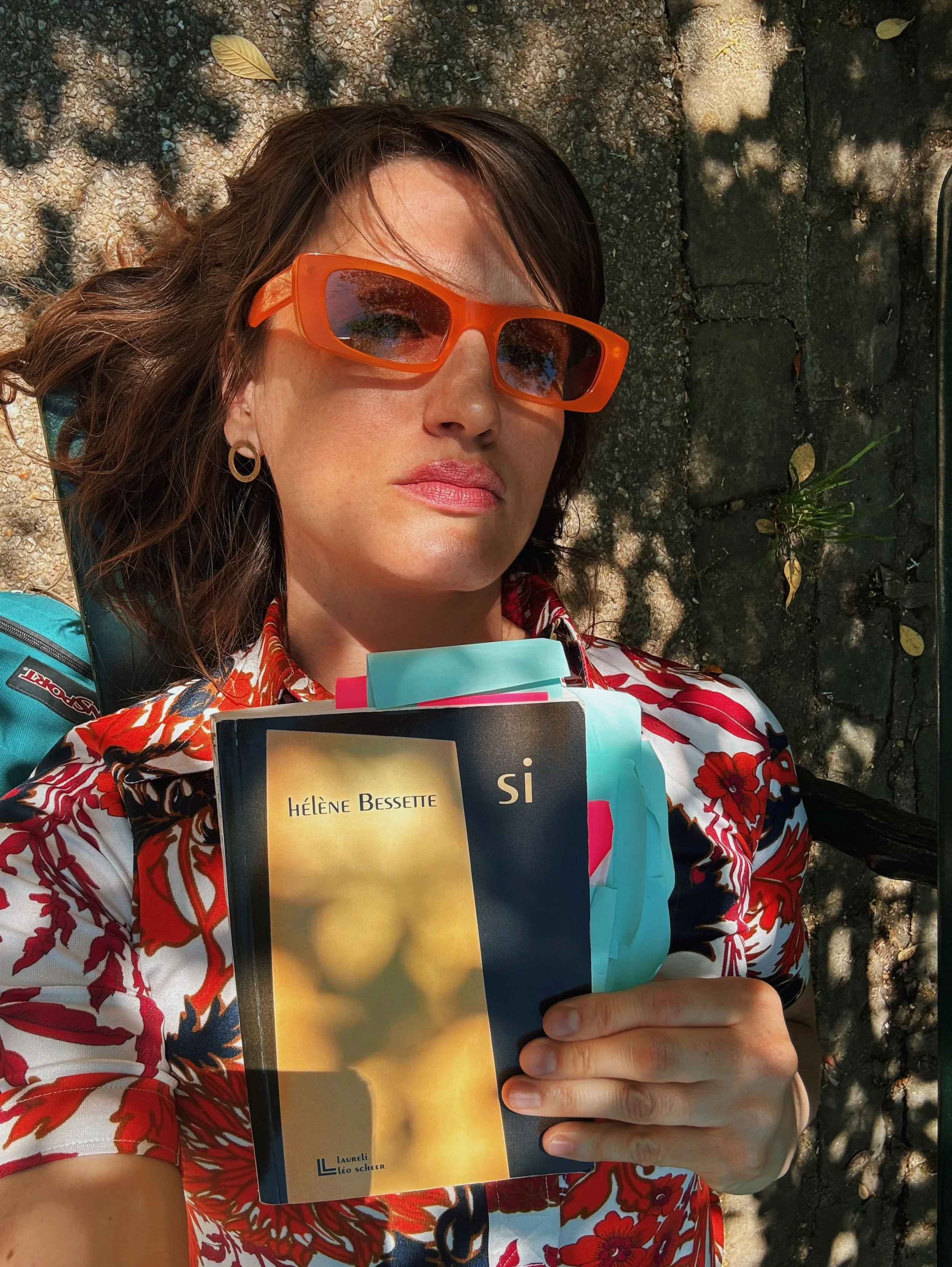
It occurs to me today — in the wake of April, National Poetry Month, and what the U.S. does in celebrating poets by encouraging steady novelists to feed the electric verse of poets into the steady lens of their selfie hands — that Bessette, poet trying to make the novel howl, was a blues writer. That the poetic novel is a blues form. Making simple language and repetition cantankerous with song, though we’ve sometimes said "shouts," against the backdrop of a convoluting and hallucinating world, often mainstayed, righted by the narcissism of market fiction Bible-beating itself into ecclesiastic orders of "art."
In my new piece, I borrow from the pantoum form to travel through variations in repetition and blues. With lines of new and old refrain. Across language, time, condition. Thank you to the Editors of Painted Bride Quarterly, especially Dagne Forrest, for seeing the soul of this text and giving it a home. An audio recording (as well as the full poem, of course) appears on the site.